Questions people ask
What size backdrop do I need?
For headshots and three quarter portraits, about 5 x 7 ft or a 53 inch paper roll. For one person full length, a backdrop at least 5 ft wide and long enough to run onto the floor (5 x 12 ft or more). For couples and small groups full length, a 107 inch (about 9 ft) roll or an 8 x 13 ft sweep. Large groups need 9 x 20 ft or 140 inch paper. The size calculator works it out from your lens and room.
What is the best backdrop material for beginners?
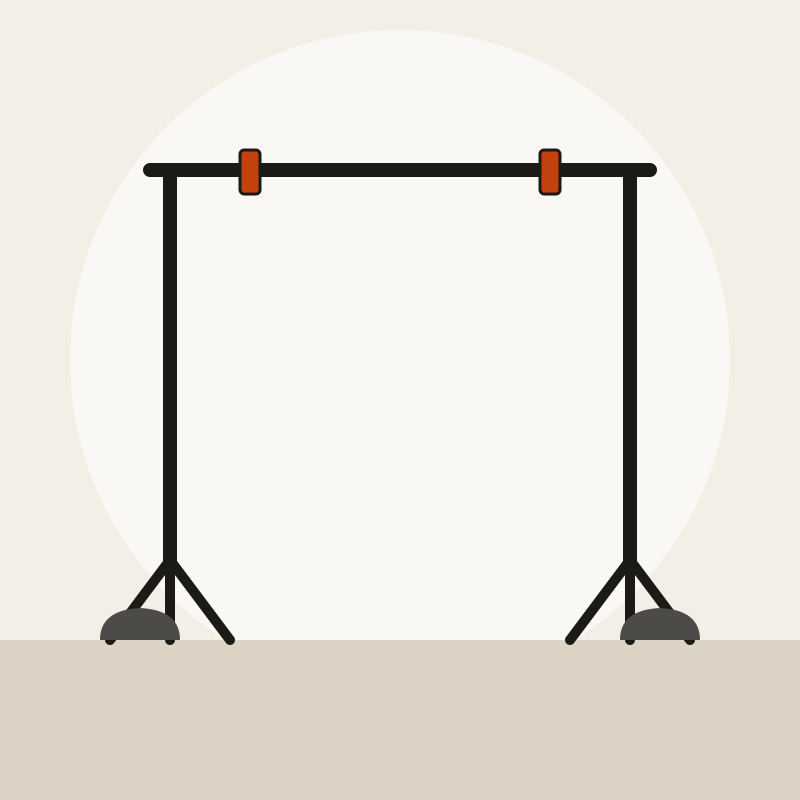
A gray or white seamless paper roll on a basic two stand support system gives the cleanest result for the money, and a damaged end can be torn off. If you shoot on location or have no storage space, a wrinkle-resistant polyester backdrop or a collapsible backdrop packs smaller.
What color backdrop is the most versatile?
A medium gray. Lit brightly it reads as light gray or near white; left in shadow it goes dark. PetaPixel and many portrait photographers call gray the most flexible single backdrop. Add white for bright product and high-key work, and black for low-key portraits.
How far should the subject stand from the backdrop?
At least 3 ft, and more when you can. Westcott suggests about 3 ft to keep shadows off the backdrop, and more distance also makes wrinkles blur and lets you darken or brighten the backdrop separately from the subject. Green screens need more room still, often 6 ft or more.
How do I get wrinkles out of a backdrop?
Hang it and steam it from the top down. Ironing is impractical on a large muslin and can leave shiny spots. Wrinkle-resistant polyester can go in a dryer on normal heat with a damp cloth, Westcott says. Distance and a wider aperture also hide what is left.
Sources: Westcott, Savage Universal, PetaPixel, Westcott care guide, Improve Photography. We have not tested these products; see how we choose.